Science Is Essential
Science touches so many aspects of modern life that it's hard to keep up. Through our programs and this website, Science for the Public provides up-to-date information about scientific innovations, discoveries, and issues that are shaping modern knowledge.
Resistance to New Ideas
Many of the most important advances in scientific understanding were initially rejected or ignored.
Life: Extreme Forms of Life
The discovery of organisms thriving in extreme temperatures and conditions deep undersea, deep in the Earth, deep in the ice suggests that life, once it emerges, is extraordinarily resilient..
Featured Items
What Your Food Ate
07/18/23 The actual nutritional value of our food depends on the quality of soil in which it is grown. Healthy soil, healthy people, healthy planet.
David R. Montgomery & Anne Biklé
The Mystery of Animal Migration
09/17/24 How migratory creatures navigate so accurately to their seasonal destinations, sometimes thousands of miles away, is still often a mystery. What do scientists know, and what are they still trying to discover? Charles Walcott
Biodiversity in the Sixth Mass Extinction
03/19/24 A prominent biologist explains the crucial importance of biodiversity for life on Earth, and how the sixth mass extinction fractures that stability. Michael Reed.
Heads Up! Surprising Stats
Science for the Public is committed to improving public knowledge of science and public appreciation for the contributions of science to social progress.

Mapping the Heavens
07/19/16 A look at how major ideas in science are often initially resisted, and a view of the invisible cosmos. Priyamvada Natarajan

Finding Their Way: How Migratory Creatures Get Where They’re Going
04/19/22 Because of a special biological feature called magnetoreception, migratory birds and other creatures are able to navigate enormous distances without getting lost. How does this capacity to “read” Earth’s magnetic field work, and is that the only map to aid migration? Charles Walcott
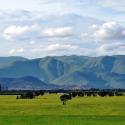
New Paradigms of Conservation
07/12/16 How a combination of innovative conservation techniques and involvement of local villages is combating damage in the Himalayas. Kamal Bawa

The Science of Clouds and Climate
03/21/15 The Cziczo Lab at MIT investigates the particles that form clouds and the vital role of clouds in climate change.
Daniel Cziczo

From The Cell to Cancer
07/15/14 What causes cancer, and how do the current different theories influence the research? A internationally prominent research team provides a unique view.
Ana Soto and Carlos Sonnenschein
Today's Featured Contributors
Featured Author

Daniel Fornari, Ph.D.
A distinguished geophysicist who has been instrumental in discoveries of deep-sea volcanoes and other ocean ridge geological phenomena.
Featured Guest

Robert Howarth, Ph..D.
This internatonally recognized biogeochemist and ecosystem expert has contributed significantly to science --and to the environmental cause.
As a world society, it seems clear that we have arrived at a point in our history when there must be a major increase in the capability of ordinary people to cope with the scientific and technological culture that is shaping their lives and the lives of their children.
—Leon Lederman, Nobel Laureate in physics