Science Is Essential
Science touches so many aspects of modern life that it's hard to keep up. Through our programs and this website, Science for the Public provides up-to-date information about scientific innovations, discoveries, and issues that are shaping modern knowledge.
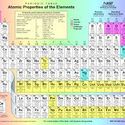
Elements
The origin of the heavy elements was not understood until the 1950s
Resistance to New Ideas
Many of the most important advances in scientific understanding were initially rejected or ignored.
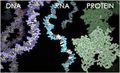
Life: Origins of Life
The necessary ingredients and conditions; formation of life's molecules; Last Universal Common Ancestor (LUCA) ....
Featured Items
What Your Food Ate
07/18/23 The actual nutritional value of our food depends on the quality of soil in which it is grown. Healthy soil, healthy people, healthy planet.
David R. Montgomery & Anne Biklé
The Mystery of Animal Migration
09/17/24 How migratory creatures navigate so accurately to their seasonal destinations, sometimes thousands of miles away, is still often a mystery. What do scientists know, and what are they still trying to discover? Charles Walcott
Biodiversity in the Sixth Mass Extinction
03/19/24 A prominent biologist explains the crucial importance of biodiversity for life on Earth, and how the sixth mass extinction fractures that stability. Michael Reed.
Heads Up! Surprising Stats
Science for the Public is committed to improving public knowledge of science and public appreciation for the contributions of science to social progress.

Formation and Diversity of Planetary Systems
11/08/21 Advanced technology reveals a super-abundance of planetary systems in the universe. And astronomers are investigating how these systems form as well as their amazing diversity. Joan Najita

Can Seagrasses Weather Ocean Warming?
06/14/21 Seagrasses feed and protect many marine species. They stabilize shorelines. They reduce ocean acidification. Can seagrasses endure ocean warming? Barnabas Daru
Stem Cell Research and Communicating Science
10/03/23 A distinguished pioneer in stem cell research for oral conditions, wound healing and diabetes explains the issues and the advances in this field, and the importance of science communication for the public. Jonathan Garlick

The Bionic Leaf: Clean Energy for All
08/02/22 A unique innovation based on photosynthesis, the bionic leaf can potentially produce energy and fuel inexpensively --and in a localized manner. Daniel Nocera

The Great Potential of Offshore WInd Farms
05/07/19 How effective are offshore wind farms in nations that have developed them, and why has the US been especially slow to adapt such an important energy resource?
Andrew Myers
Today's Featured Contributors
Featured Author

Priyamvada Natarajan, Ph.D.
A splendid discussion of the initial resistance to --and ultimate acceptance of—many fundamental concepts of modern astrophysics/astronomy
Featured Guest

John Rogers
An expert on freshwater use, the freshwater crisis, and the potential of alternative energy
As a world society, it seems clear that we have arrived at a point in our history when there must be a major increase in the capability of ordinary people to cope with the scientific and technological culture that is shaping their lives and the lives of their children.
—Leon Lederman, Nobel Laureate in physics