Science Is Essential
Science touches so many aspects of modern life that it's hard to keep up. Through our programs and this website, Science for the Public provides up-to-date information about scientific innovations, discoveries, and issues that are shaping modern knowledge.
Cosmos: Solar Systems
Stellar death explosions produce massive gas and dust clouds, and some of that detritus becomes solar systems ...
Dark Matter
We think of "matter" as stuff made of atoms. That kind of matter is an insignificant amount . Something like 84 percent of the matter in the universe is invisible and unidentifiable "dark matter."
Resistance to New Ideas
Many of the most important advances in scientific understanding were initially rejected or ignored.
Life: Synthetic Life
Partly in order to understand its amazing complexity, and partly in order to advance medical therapies. So, how do you create a viable cell?
Featured Items
What Your Food Ate
07/18/23 The actual nutritional value of our food depends on the quality of soil in which it is grown. Healthy soil, healthy people, healthy planet.
David R. Montgomery & Anne Biklé
The Mystery of Animal Migration
09/17/24 How migratory creatures navigate so accurately to their seasonal destinations, sometimes thousands of miles away, is still often a mystery. What do scientists know, and what are they still trying to discover? Charles Walcott
Biodiversity in the Sixth Mass Extinction
03/19/24 A prominent biologist explains the crucial importance of biodiversity for life on Earth, and how the sixth mass extinction fractures that stability. Michael Reed.
Heads Up! Surprising Stats
Science for the Public is committed to improving public knowledge of science and public appreciation for the contributions of science to social progress.
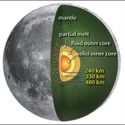
The Core of the Moon
05/09/12 Did the ancient moon have a magnetic field like Earth's? And why do scientists need to know? Benjamin Weiss

Gamma Ray Bursts
01/26/16 An explanation of the most spectacular explosions in the universe, and their possible impact on life.
Raul Jimenez
The Biological Mind
03/27/18 The "mind" is not an isolated entity; it is connected to a physical-social environment. Alan Jasanoff

Solar Geoengineering: What You Need to Know
09/24/24 WGBH Forum Network webinar, The alarming increase in global warming has stimulated interest in solar geoengineering, a means of shading the planet --but not a means of reducing the source of warming, the excessive CO2 and methane in the atmosphere. Daniel Cziczo

Understanding Viruses: The Connor Lab
07/2014 The Connor Lab at Boston University is a leader in the effort to understand how viruses infect and how cells learn how to block infection. John Connor

Designing Sustainable Urban Development
11/25/19 How the world-class Sustainable Design Lab at MIT combines architecture, engineering, physics --and creative genius-- to design the optimal urban environment.
Christoph Reinhart
Today's Featured Contributors
Featured Author
Jon Beckwith, Ph.D.
A great scientist's dual role as geneticist and social activist
Featured Guest

Maria Ivanova, Ph.D.
An outstanding researcher and advocate for international policies to protect wildlife, environment and resources.
As a world society, it seems clear that we have arrived at a point in our history when there must be a major increase in the capability of ordinary people to cope with the scientific and technological culture that is shaping their lives and the lives of their children.
—Leon Lederman, Nobel Laureate in physics