Science Is Essential
Science touches so many aspects of modern life that it's hard to keep up. Through our programs and this website, Science for the Public provides up-to-date information about scientific innovations, discoveries, and issues that are shaping modern knowledge.
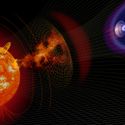
Cosmos: Black Holes
Paradoxical objects that underscore the mystery of the universe, black holes seem the ultimate destructive force, but may be essential to the stability of galaxies...
Symbiogenesis
Lynn Margulis's theory of how microbe combinations led to complex cells in evolution was rejected by the scientific establishment for years.
Resistance to New Ideas
Many of the most important advances in scientific understanding were initially rejected or ignored.
Life: Defining Life
The fine line between animate and inanimate, and between quasi-life and life. ....
Featured Items
What Your Food Ate
07/18/23 The actual nutritional value of our food depends on the quality of soil in which it is grown. Healthy soil, healthy people, healthy planet.
David R. Montgomery & Anne Biklé
The Mystery of Animal Migration
09/17/24 How migratory creatures navigate so accurately to their seasonal destinations, sometimes thousands of miles away, is still often a mystery. What do scientists know, and what are they still trying to discover? Charles Walcott
Biodiversity in the Sixth Mass Extinction
03/19/24 A prominent biologist explains the crucial importance of biodiversity for life on Earth, and how the sixth mass extinction fractures that stability. Michael Reed.
Heads Up! Surprising Stats
Science for the Public is committed to improving public knowledge of science and public appreciation for the contributions of science to social progress.
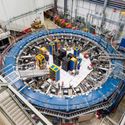
Beyond the Standard Model? The Latest from Fermilab
06/07/21 A discussion about the recent Muon g-2 experiment at Fermi National Accelerator Laboratory (Fermilab) and also Fermilab's work on the upgrade of the CMS project at CERN. Steve Nahn and James Mott
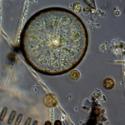
Plankton: The Humble Base of the Ocean Ecosystem
02/14/17 Ancient diatom fossils provide clues to the adaptability of these vital organisms in the deep past, and can help predict plankton survival in the present climate change.
Christopher Bowler
Cracking the Neural Code for Speech
01/27/12 vThe Neural Prosthesis Lab at Boston University demonstrates the Brain-Computer-Interface: a communication device for the severely impaired.
Frank Guenther
Harvesting Electricity Out of Thin Air
10/24/23 Imagine a future world in which clean electricity is available anywhere you go. The generic Air-gen effect innovation means that this future world can become a reality. Jun Yao

Solar Energy the Third Way
02/14/12 Efficient production of solar energy with solar thermo-electric generators (STEGs)... Gang Chen
Today's Featured Contributors
Featured Author

David Toomey, Ph.D.
A writer who also teaches science-technical writing (as well as literature)
Featured Guest

Gigliola Staffilani, PhD
A theoretical mathematician who elucidates some of the most difficult forces and patterns of Nature
As a world society, it seems clear that we have arrived at a point in our history when there must be a major increase in the capability of ordinary people to cope with the scientific and technological culture that is shaping their lives and the lives of their children.
—Leon Lederman, Nobel Laureate in physics