Science Is Essential
Science touches so many aspects of modern life that it's hard to keep up. Through our programs and this website, Science for the Public provides up-to-date information about scientific innovations, discoveries, and issues that are shaping modern knowledge.
Antimatter
Each particle has a opposite form, its anti-particle, a discovery that has had wide-ranging effects
Resistance to New Ideas
Many of the most important advances in scientific understanding were initially rejected or ignored.
Life: Synthetic Life
Partly in order to understand its amazing complexity, and partly in order to advance medical therapies. So, how do you create a viable cell?
Featured Items
What Your Food Ate
07/18/23 The actual nutritional value of our food depends on the quality of soil in which it is grown. Healthy soil, healthy people, healthy planet.
David R. Montgomery & Anne Biklé
The Mystery of Animal Migration
09/17/24 How migratory creatures navigate so accurately to their seasonal destinations, sometimes thousands of miles away, is still often a mystery. What do scientists know, and what are they still trying to discover? Charles Walcott
Biodiversity in the Sixth Mass Extinction
03/19/24 A prominent biologist explains the crucial importance of biodiversity for life on Earth, and how the sixth mass extinction fractures that stability. Michael Reed.
Heads Up! Surprising Stats
Science for the Public is committed to improving public knowledge of science and public appreciation for the contributions of science to social progress.
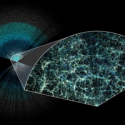
Our Expanding Universe: The DESI Project's First Results
05/14/24 WGBH Forum Network Webinar. The Dark Energy Spectroscopic Instrument (DESI), specifically designed to measure the universe's expansion, has now produced the largest and most precise 3D map for the expansion analysis. And the first results of the survey are amazing. Paul Martini

Climate Change and Ocean Circulation Systems
09/28/20 Ocean currents transport heat and cold around the globe, affecting weather and climate, and delivering nutrients to marine life. How does the accelerating climate change impact this vital system? Amy Bower

Weighing In on Metabolism
09/13/22 The increasing rate of obesity is a public health issue. Nutritionists analyze the cause and the solution. Susan Roberts
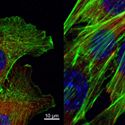
Probing the Causes of Cancer
02/22/21 The dual role of socioeconomic background and a family of (BET) proteins in the disproportionate occurrence of certain cancers. Gerald V. Denis
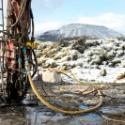
Carbon Capture and Storage Will Not Reduce Global Warming
02/09/24 GBH Forum Network webinar (noon ET) The extreme level of atmospheric CO2 is well beyond a “capture and storage/sequestration” solution, yet the hype persists that some clever extraction innovation will resolve the problem. Charles Harvey
Today's Featured Contributors
Featured Author

John Quackenbush, Ph.D.
A very engaging discussion of the human genome project by one of the researchers involved
Featured Guest

Markus Klute, Ph.D.
A particle physicist involved in both the search for new particles (Large Hadron Collider, CERN) and the design of particle detectors.
As a world society, it seems clear that we have arrived at a point in our history when there must be a major increase in the capability of ordinary people to cope with the scientific and technological culture that is shaping their lives and the lives of their children.
—Leon Lederman, Nobel Laureate in physics