Science Is Essential
Science touches so many aspects of modern life that it's hard to keep up. Through our programs and this website, Science for the Public provides up-to-date information about scientific innovations, discoveries, and issues that are shaping modern knowledge.
Big Bang
A theory we acept today was originally rejected by most physicists
Resistance to New Ideas
Many of the most important advances in scientific understanding were initially rejected or ignored.
Life: Extreme Forms of Life
The discovery of organisms thriving in extreme temperatures and conditions deep undersea, deep in the Earth, deep in the ice suggests that life, once it emerges, is extraordinarily resilient..
Featured Items
What Your Food Ate
07/18/23 The actual nutritional value of our food depends on the quality of soil in which it is grown. Healthy soil, healthy people, healthy planet.
David R. Montgomery & Anne Biklé
The Mystery of Animal Migration
09/17/24 How migratory creatures navigate so accurately to their seasonal destinations, sometimes thousands of miles away, is still often a mystery. What do scientists know, and what are they still trying to discover? Charles Walcott
Biodiversity in the Sixth Mass Extinction
03/19/24 A prominent biologist explains the crucial importance of biodiversity for life on Earth, and how the sixth mass extinction fractures that stability. Michael Reed.
Heads Up! Surprising Stats
Science for the Public is committed to improving public knowledge of science and public appreciation for the contributions of science to social progress.
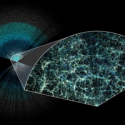
Our Expanding Universe: The DESI Project's First Results
05/14/24 WGBH Forum Network Webinar. The Dark Energy Spectroscopic Instrument (DESI), specifically designed to measure the universe's expansion, has now produced the largest and most precise 3D map for the expansion analysis. And the first results of the survey are amazing. Paul Martini
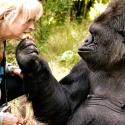
Human Language, Animal Communication
04/26/21 The evolution of the human language apparatus, comparison of human language and animal communication, and explanation of the Neanderthal language controversy. Philip Lieberman
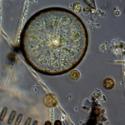
Plankton: The Humble Base of the Ocean Ecosystem
02/14/17 Ancient diatom fossils provide clues to the adaptability of these vital organisms in the deep past, and can help predict plankton survival in the present climate change.
Christopher Bowler

Real Public Health Is More Than Just Healthcare
01-23-24 GBH Forum Network webinar (1 PM ET). In his newest book, Sandro Galea emphasizes that the field of public health is committed as much to preventing disease as to treating it. Public health includes the social factors that frame our lives. To develop a foundation for better health requires a rational policy dialogue. Sandro Galea

The Great Potential of Offshore WInd Farms
05/07/19 How effective are offshore wind farms in nations that have developed them, and why has the US been especially slow to adapt such an important energy resource?
Andrew Myers
Today's Featured Contributors
Featured Author

Priyamvada Natarajan, Ph.D.
A splendid discussion of the initial resistance to --and ultimate acceptance of—many fundamental concepts of modern astrophysics/astronomy
Featured Guest

Dan Cziczo, PhD
A leading researcher on the science of clouds and what clouds reveal about climate change
As a world society, it seems clear that we have arrived at a point in our history when there must be a major increase in the capability of ordinary people to cope with the scientific and technological culture that is shaping their lives and the lives of their children.
—Leon Lederman, Nobel Laureate in physics