Science Is Essential
Science touches so many aspects of modern life that it's hard to keep up. Through our programs and this website, Science for the Public provides up-to-date information about scientific innovations, discoveries, and issues that are shaping modern knowledge.
Cosmos: Galaxies
Stars formed in clusters in the huge clouds that became the early galaxies...
Resistance to New Ideas
Many of the most important advances in scientific understanding were initially rejected or ignored.
Life: Evolution and Extinction
The long reign of bacteria, the eventual branching and diversification, symbiogenesis, the dramatic mass extinctions and resurgence of life...
Featured Items
What Your Food Ate
07/18/23 The actual nutritional value of our food depends on the quality of soil in which it is grown. Healthy soil, healthy people, healthy planet.
David R. Montgomery & Anne Biklé
The Mystery of Animal Migration
09/17/24 How migratory creatures navigate so accurately to their seasonal destinations, sometimes thousands of miles away, is still often a mystery. What do scientists know, and what are they still trying to discover? Charles Walcott
Biodiversity in the Sixth Mass Extinction
03/19/24 A prominent biologist explains the crucial importance of biodiversity for life on Earth, and how the sixth mass extinction fractures that stability. Michael Reed.
Heads Up! Surprising Stats
Science for the Public is committed to improving public knowledge of science and public appreciation for the contributions of science to social progress.

Astrophysics Knowns and Unknowns
12/20/16 A guide to fundamentals of astrophyics at a time of many exciting --and sometimes puzzling-- discoveries. Priyamvada Natarajan

The Grand Geometry of Nature
09/18/12 As these mathematicians explain, with numerous examples, the deepest truths of Nature are mathematical. Tom Mrowka and Gigliola Staffilani

Why AI Can Seem Sentient
05/10/23 Although technologies such as ChatBots are not conscious, their sophisticated communications can seem human enough to fool people. That raises concerns. Nir Eisikovits

Psychiatric Drugs: Why They Often Fail Us Over Long Term
04/23/19 More than one in five Americans now takes a psychiatric medication. But long-term results are poor. Robert Whitaker, author of several books on this subject, discusses the problems of these meds and describes more effective initiatives.
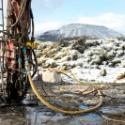
Carbon Capture and Storage Will Not Reduce Global Warming
02/09/24 GBH Forum Network webinar (noon ET) The extreme level of atmospheric CO2 is well beyond a “capture and storage/sequestration” solution, yet the hype persists that some clever extraction innovation will resolve the problem. Charles Harvey
Today's Featured Contributors
Featured Author

Clive Hamilton, Ph.D.
An international spokesman for the environment, for alternative energy to replace fossil fuels, and a rational public policy
Featured Guest

Andrew Knoll, Ph.D.
An international expert on the interdependence of the evolution of early life and the young Earth
As a world society, it seems clear that we have arrived at a point in our history when there must be a major increase in the capability of ordinary people to cope with the scientific and technological culture that is shaping their lives and the lives of their children.
—Leon Lederman, Nobel Laureate in physics