Science Is Essential
Science touches so many aspects of modern life that it's hard to keep up. Through our programs and this website, Science for the Public provides up-to-date information about scientific innovations, discoveries, and issues that are shaping modern knowledge.
Resistance to New Ideas
Many of the most important advances in scientific understanding were initially rejected or ignored.
Life: Life beyond Earth
The basic chemical elements of life on Earth are the most abundant elements in the universe...Are the conditions right elsewhere?
Featured Items
What Your Food Ate
07/18/23 The actual nutritional value of our food depends on the quality of soil in which it is grown. Healthy soil, healthy people, healthy planet.
David R. Montgomery & Anne Biklé
The Mystery of Animal Migration
09/17/24 How migratory creatures navigate so accurately to their seasonal destinations, sometimes thousands of miles away, is still often a mystery. What do scientists know, and what are they still trying to discover? Charles Walcott
Biodiversity in the Sixth Mass Extinction
03/19/24 A prominent biologist explains the crucial importance of biodiversity for life on Earth, and how the sixth mass extinction fractures that stability. Michael Reed.
Heads Up! Surprising Stats
Science for the Public is committed to improving public knowledge of science and public appreciation for the contributions of science to social progress.

Mapping the Heavens
07/19/16 A look at how major ideas in science are often initially resisted, and a view of the invisible cosmos. Priyamvada Natarajan

Deep-Sea Volcanoes
04/26/16 Scientists are now able to study in detail the dynamic volcanic activity of the deep ocean ridges. Here are some amazing discoveries. Daniel Fornari

The Real Key to Feeding the World
09/20/21 The distinguished scientist and author of "Growing a Revolution: Bringing Our Soil Back to Life" explains the destructiveness of industrialized agriculture and shows how to feed the world while restoring the soil and environment. David Montgomery
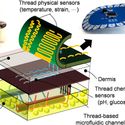
Breakthroughs in Nanotechnology
09/27/16 Advances in nanotechnology are revolutionizing medicine. A leader in the field describes recent developments and his commitment to making them available to a wide public. Sameer Sonkusale
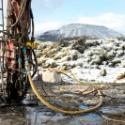
Carbon Capture and Storage Will Not Reduce Global Warming
02/09/24 GBH Forum Network webinar (noon ET) The extreme level of atmospheric CO2 is well beyond a “capture and storage/sequestration” solution, yet the hype persists that some clever extraction innovation will resolve the problem. Charles Harvey
Today's Featured Contributors
Featured Author

Mick Follows, Ph.D.
An interdisciplinary perspective on the biogeochemical relationships of ocean cycles
Featured Guest
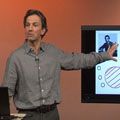
Jané Kondev, PhD
An expert on the physical mechanisms of cells explains the implications of the random decisions cells make.
As a world society, it seems clear that we have arrived at a point in our history when there must be a major increase in the capability of ordinary people to cope with the scientific and technological culture that is shaping their lives and the lives of their children.
—Leon Lederman, Nobel Laureate in physics