Science Is Essential
Science touches so many aspects of modern life that it's hard to keep up. Through our programs and this website, Science for the Public provides up-to-date information about scientific innovations, discoveries, and issues that are shaping modern knowledge.
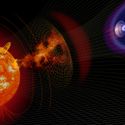
Cosmos: Galaxies
Stars formed in clusters in the huge clouds that became the early galaxies...
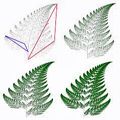
Fractal Geometry
A concept that was originally treated with skeptism is widely accepted today
Resistance to New Ideas
Many of the most important advances in scientific understanding were initially rejected or ignored.
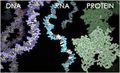
Life: Origins of Life
The necessary ingredients and conditions; formation of life's molecules; Last Universal Common Ancestor (LUCA) ....
Featured Items
What Your Food Ate
07/18/23 The actual nutritional value of our food depends on the quality of soil in which it is grown. Healthy soil, healthy people, healthy planet.
David R. Montgomery & Anne Biklé
The Mystery of Animal Migration
09/17/24 How migratory creatures navigate so accurately to their seasonal destinations, sometimes thousands of miles away, is still often a mystery. What do scientists know, and what are they still trying to discover? Charles Walcott
Biodiversity in the Sixth Mass Extinction
03/19/24 A prominent biologist explains the crucial importance of biodiversity for life on Earth, and how the sixth mass extinction fractures that stability. Michael Reed.
Heads Up! Surprising Stats
Science for the Public is committed to improving public knowledge of science and public appreciation for the contributions of science to social progress.
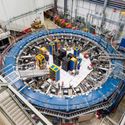
Beyond the Standard Model? The Latest from Fermilab
06/07/21 A discussion about the recent Muon g-2 experiment at Fermi National Accelerator Laboratory (Fermilab) and also Fermilab's work on the upgrade of the CMS project at CERN. Steve Nahn and James Mott

Solar Geoengineering: What You Need to Know
09/24/24 WGBH Forum Network webinar, The alarming increase in global warming has stimulated interest in solar geoengineering, a means of shading the planet --but not a means of reducing the source of warming, the excessive CO2 and methane in the atmosphere. Daniel Cziczo
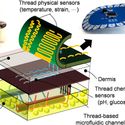
Breakthroughs in Nanotechnology
09/27/16 Advances in nanotechnology are revolutionizing medicine. A leader in the field describes recent developments and his commitment to making them available to a wide public. Sameer Sonkusale
Innovations for the People: The GEAR Lab at MIT
10/19/20 The Global Engineering and Research (GEAR) Lab produces cost-saving, practical innovations that make a real difference for developing nations: home-use desalination, drip irrigation -and many other solutions. Amos Winter
Today's Featured Contributors
Featured Author

David Mindell, Ph.D.
A leading robotics engineer and historian explains the role of robots in research and other fields today
Featured Guest

Justin Solomon, Ph.D.
A mathematician deconstructs the gerrymander for public understanding --and his work extends well beyond that
As a world society, it seems clear that we have arrived at a point in our history when there must be a major increase in the capability of ordinary people to cope with the scientific and technological culture that is shaping their lives and the lives of their children.
—Leon Lederman, Nobel Laureate in physics