Science Is Essential
Science touches so many aspects of modern life that it's hard to keep up. Through our programs and this website, Science for the Public provides up-to-date information about scientific innovations, discoveries, and issues that are shaping modern knowledge.
Cosmos: Black Holes
Paradoxical objects that underscore the mystery of the universe, black holes seem the ultimate destructive force, but may be essential to the stability of galaxies...
Evolution
One of the greatest scientific breakthroughs of all time still meets resistance today
Resistance to New Ideas
Many of the most important advances in scientific understanding were initially rejected or ignored.
Life: Extreme Forms of Life
The discovery of organisms thriving in extreme temperatures and conditions deep undersea, deep in the Earth, deep in the ice suggests that life, once it emerges, is extraordinarily resilient..
Featured Items
What Your Food Ate
07/18/23 The actual nutritional value of our food depends on the quality of soil in which it is grown. Healthy soil, healthy people, healthy planet.
David R. Montgomery & Anne Biklé
The Mystery of Animal Migration
09/17/24 How migratory creatures navigate so accurately to their seasonal destinations, sometimes thousands of miles away, is still often a mystery. What do scientists know, and what are they still trying to discover? Charles Walcott
Biodiversity in the Sixth Mass Extinction
03/19/24 A prominent biologist explains the crucial importance of biodiversity for life on Earth, and how the sixth mass extinction fractures that stability. Michael Reed.
Heads Up! Surprising Stats
Science for the Public is committed to improving public knowledge of science and public appreciation for the contributions of science to social progress.

The Jurassic Genome
12/09/09 Genetic material in ancient fossils yields an amazing profile of extinct organisms. Chris Organ

Addressing the Global Water Shortage
03/11/25 Due mainly to climate change and wasteful agricultural practices, the supply of freshwater is rapidly diminishing across the globe. Governments must quickly develop advanced conservation and sustainability policies. Jay Famiglietti
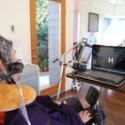
The Brain-Computer-Interface Paradox
05-20-25 For individuals paralyzed by injury, stroke or ALS, brain-computer-interface (BCI) devices can enable movement and even speech. However, there are concerns: specifically, that such technology could be developed for mind control. Lukas Meier
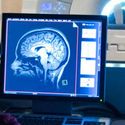
New Ways of Imaging the Brain
08/16/18 A visit to the Alan Jasanoff Lab at MIT to learn how brain scientists are developing new techniques and devices to improve brain imaging.

The Urban Future: On Earth...and Elsewhere
12/05/23 GBH Forum Network webinar (noon). By 2050, some 75 percent of the world population will live in cities. Future urban design will emphasize not only innovative architecture and engineering, but optimal environmental and social aspects of city dwelling also. The urban future might also include settlements beyond Earth. Justin Hollander
Today's Featured Contributors
Featured Guest

Tanya Smith, PhD
An expert on reconstructing individual histories through fossil teeth
As a world society, it seems clear that we have arrived at a point in our history when there must be a major increase in the capability of ordinary people to cope with the scientific and technological culture that is shaping their lives and the lives of their children.
—Leon Lederman, Nobel Laureate in physics