Science Is Essential
Science touches so many aspects of modern life that it's hard to keep up. Through our programs and this website, Science for the Public provides up-to-date information about scientific innovations, discoveries, and issues that are shaping modern knowledge.
Climate Change
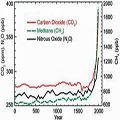
The undeniable facts of the human impact on global climate are still being resisted
Resistance to New Ideas
Many of the most important advances in scientific understanding were initially rejected or ignored.
Life: Evolution and Extinction
The long reign of bacteria, the eventual branching and diversification, symbiogenesis, the dramatic mass extinctions and resurgence of life...
Featured Items
What Your Food Ate
07/18/23 The actual nutritional value of our food depends on the quality of soil in which it is grown. Healthy soil, healthy people, healthy planet.
David R. Montgomery & Anne Biklé
The Mystery of Animal Migration
09/17/24 How migratory creatures navigate so accurately to their seasonal destinations, sometimes thousands of miles away, is still often a mystery. What do scientists know, and what are they still trying to discover? Charles Walcott
Biodiversity in the Sixth Mass Extinction
03/19/24 A prominent biologist explains the crucial importance of biodiversity for life on Earth, and how the sixth mass extinction fractures that stability. Michael Reed.
Heads Up! Surprising Stats
Science for the Public is committed to improving public knowledge of science and public appreciation for the contributions of science to social progress.

Probing Exoplanet Atmospheres
05/08/17 A description of exoplanet atmospheres and how scientists attempt to analyze these alien atmospheres. Alexandria Johnson
Alexandria Johnson

All about Jellyfish
08/10/20 Get the real facts about those about lion's mane jellyfish near Massachusetts beaches, but get the real science about jellyfish in general: their amazing biology and their role in marine ecosystems. Laurence Madin

The Opioid Crisis: Origin and Implications
05/30/23 The Centers for Disease Control and Prevention (CDC) has aptly described the opioid crisis as the “worst drug overdose epidemic in [US] history.” How did that happen? Andrew Kolodny, M.D.
Today's Featured Contributors
Featured Guest

Elliott Negin
A prominent Union of Concerned Scientists writer who is a very reliable source of information about science-related issues
As a world society, it seems clear that we have arrived at a point in our history when there must be a major increase in the capability of ordinary people to cope with the scientific and technological culture that is shaping their lives and the lives of their children.
—Leon Lederman, Nobel Laureate in physics