Science Is Essential
Science touches so many aspects of modern life that it's hard to keep up. Through our programs and this website, Science for the Public provides up-to-date information about scientific innovations, discoveries, and issues that are shaping modern knowledge.
Cosmos: Solar Systems
Stellar death explosions produce massive gas and dust clouds, and some of that detritus becomes solar systems ...
Antimatter
Each particle has a opposite form, its anti-particle, a discovery that has had wide-ranging effects
Resistance to New Ideas
Many of the most important advances in scientific understanding were initially rejected or ignored.
Life: Origins of Life
The necessary ingredients and conditions; formation of life's molecules; Last Universal Common Ancestor (LUCA) ....
Featured Items
What Your Food Ate
07/18/23 The actual nutritional value of our food depends on the quality of soil in which it is grown. Healthy soil, healthy people, healthy planet.
David R. Montgomery & Anne Biklé
The Mystery of Animal Migration
09/17/24 How migratory creatures navigate so accurately to their seasonal destinations, sometimes thousands of miles away, is still often a mystery. What do scientists know, and what are they still trying to discover? Charles Walcott
Biodiversity in the Sixth Mass Extinction
03/19/24 A prominent biologist explains the crucial importance of biodiversity for life on Earth, and how the sixth mass extinction fractures that stability. Michael Reed.
Heads Up! Surprising Stats
Science for the Public is committed to improving public knowledge of science and public appreciation for the contributions of science to social progress.

They Didn't Believe It! Dark Matter
12/02/19 Most of the matter in the universe is invisible --and scientists still do not know what it is. This is a brief story of how the idea of dark matter was very slowly accepted.

The Dark Age of the Universe
05/12/15 What scientists are learning about the "dark ages" of the early universe -before light emerged.
Lincoln Greenhill
How Ocean Acidification Harms Shellfish
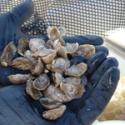
01/11/21 Climate change has brought ocean acidification and ocean acidification is a serious threat to shellfish. What can be done to save sealife? Louise Cameron

Psychiatric Drugs: Why They Often Fail Us Over Long Term
04/23/19 More than one in five Americans now takes a psychiatric medication. But long-term results are poor. Robert Whitaker, author of several books on this subject, discusses the problems of these meds and describes more effective initiatives.

The Great Potential of Offshore WInd Farms
05/07/19 How effective are offshore wind farms in nations that have developed them, and why has the US been especially slow to adapt such an important energy resource?
Andrew Myers
Today's Featured Contributors
Featured Author

Mick Follows, Ph.D.
An interdisciplinary perspective on the biogeochemical relationships of ocean cycles
Featured Guest

Julie Guthman, Ph.D.
A distinguished social scientist who analyzes the relationship between Big Agriculture, health and environment
As a world society, it seems clear that we have arrived at a point in our history when there must be a major increase in the capability of ordinary people to cope with the scientific and technological culture that is shaping their lives and the lives of their children.
—Leon Lederman, Nobel Laureate in physics