Science Is Essential
Science touches so many aspects of modern life that it's hard to keep up. Through our programs and this website, Science for the Public provides up-to-date information about scientific innovations, discoveries, and issues that are shaping modern knowledge.
Black Holes
Proof that massive stars would form black holes was rejected because of bias.
Resistance to New Ideas
Many of the most important advances in scientific understanding were initially rejected or ignored.
Life: Extreme Forms of Life
The discovery of organisms thriving in extreme temperatures and conditions deep undersea, deep in the Earth, deep in the ice suggests that life, once it emerges, is extraordinarily resilient..
Featured Items
What Your Food Ate
07/18/23 The actual nutritional value of our food depends on the quality of soil in which it is grown. Healthy soil, healthy people, healthy planet.
David R. Montgomery & Anne Biklé
The Mystery of Animal Migration
09/17/24 How migratory creatures navigate so accurately to their seasonal destinations, sometimes thousands of miles away, is still often a mystery. What do scientists know, and what are they still trying to discover? Charles Walcott
Biodiversity in the Sixth Mass Extinction
03/19/24 A prominent biologist explains the crucial importance of biodiversity for life on Earth, and how the sixth mass extinction fractures that stability. Michael Reed.
Heads Up! Surprising Stats
Science for the Public is committed to improving public knowledge of science and public appreciation for the contributions of science to social progress.

Dark Energy and the Cosmic Expansion
12/14/21 The Dark Energy Spectroscopic Instrument (DESI) is the most advanced probe of the relationship between dark energy and the expansion of the universe. A unique project in astronomy.
Arjun Dey

Astrophysics Knowns and Unknowns
12/20/16 A guide to fundamentals of astrophyics at a time of many exciting --and sometimes puzzling-- discoveries. Priyamvada Natarajan

The Science of Clouds and Climate
03/21/15 The Cziczo Lab at MIT investigates the particles that form clouds and the vital role of clouds in climate change.
Daniel Cziczo
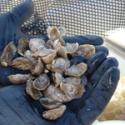
How Ocean Acidification Harms Shellfish
01/11/21 Climate change has brought ocean acidification and ocean acidification is a serious threat to shellfish. What can be done to save sealife? Louise Cameron

How Effective Are Vitamin D Supplements?
04/23/24 Promoted for years as a means to strengthen bones and lower risk of multiple diseases, improved studies by JoAnn Manson and others revealed that Vitamin D supplements were not very effective at all. Natural sources, including sunshine, are much better. It’s important to understand why. JoAnn Manson

Designing Sustainable Urban Development
11/25/19 How the world-class Sustainable Design Lab at MIT combines architecture, engineering, physics --and creative genius-- to design the optimal urban environment.
Christoph Reinhart
Today's Featured Contributors
Featured Guest

Lynn Adler, Ph.D
A biologist who investigates the relationship between bumblebees, their preferred food-flowers, and the transmission of bee diseases.
As a world society, it seems clear that we have arrived at a point in our history when there must be a major increase in the capability of ordinary people to cope with the scientific and technological culture that is shaping their lives and the lives of their children.
—Leon Lederman, Nobel Laureate in physics