Science Is Essential
Science touches so many aspects of modern life that it's hard to keep up. Through our programs and this website, Science for the Public provides up-to-date information about scientific innovations, discoveries, and issues that are shaping modern knowledge.
Cosmos: Black Holes
Paradoxical objects that underscore the mystery of the universe, black holes seem the ultimate destructive force, but may be essential to the stability of galaxies...
Antimatter
Each particle has a opposite form, its anti-particle, a discovery that has had wide-ranging effects
Resistance to New Ideas
Many of the most important advances in scientific understanding were initially rejected or ignored.
Life: Evolution and Extinction
The long reign of bacteria, the eventual branching and diversification, symbiogenesis, the dramatic mass extinctions and resurgence of life...
Featured Items
What Your Food Ate
07/18/23 The actual nutritional value of our food depends on the quality of soil in which it is grown. Healthy soil, healthy people, healthy planet.
David R. Montgomery & Anne Biklé
The Mystery of Animal Migration
09/17/24 How migratory creatures navigate so accurately to their seasonal destinations, sometimes thousands of miles away, is still often a mystery. What do scientists know, and what are they still trying to discover? Charles Walcott
Biodiversity in the Sixth Mass Extinction
03/19/24 A prominent biologist explains the crucial importance of biodiversity for life on Earth, and how the sixth mass extinction fractures that stability. Michael Reed.
Heads Up! Surprising Stats
Science for the Public is committed to improving public knowledge of science and public appreciation for the contributions of science to social progress.

Gamma Ray Bursts
01/26/16 An explanation of the most spectacular explosions in the universe, and their possible impact on life.
Raul Jimenez

Earth Life and Weird Life
12/17/15 The compelling search for entirely new forms of life elsewhere in our solar system and the universe. David Toomey
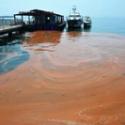
Troubled Waters: Red Tides and Other Algae Blooms
12/12/23 Belmont Media Center. Runoffs from agriculture, industries and other sources accumulate in many waters and cause harmful algae blooms (HABs), including the red tides that are increasingly common. Algal blooms are now occurring in every coastal state in the U.S., and are a major threat to marine organisms --and people. Patricia Glibert

Cooler Smarter
06/28/12 A co-author of the new book from the Union of Concerned Scientists describes how individuals can substantially reduce their carbon footprints while creating a healthy lifestyle...Jeff Deyette

The Bionic Leaf: Clean Energy for All
08/02/22 A unique innovation based on photosynthesis, the bionic leaf can potentially produce energy and fuel inexpensively --and in a localized manner. Daniel Nocera
Today's Featured Contributors
Featured Author

Anne Biklé
Biologist and Environmental Planner; co-author with David R. Montgomery of two excellent books on soil health, regeneration --and the relationship to healthy food.
Featured Guest

Beth Orcutt
A specialist in the important role of deep-sea microbial ecosystems that are the foundation for marine life. These ecosystems may be disrupted by deep-sea mining and sub-seafloor carbon sequestration.
As a world society, it seems clear that we have arrived at a point in our history when there must be a major increase in the capability of ordinary people to cope with the scientific and technological culture that is shaping their lives and the lives of their children.
—Leon Lederman, Nobel Laureate in physics