Science Is Essential
Science touches so many aspects of modern life that it's hard to keep up. Through our programs and this website, Science for the Public provides up-to-date information about scientific innovations, discoveries, and issues that are shaping modern knowledge.
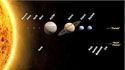
Cosmos: Solar Systems
Stellar death explosions produce massive gas and dust clouds, and some of that detritus becomes solar systems ...
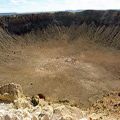
Resistance to New Ideas
Many of the most important advances in scientific understanding were initially rejected or ignored.
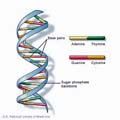
Life: Defining Life
The fine line between animate and inanimate, and between quasi-life and life. ....
Featured Items
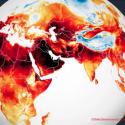
Our Record-Breaking Global Heat
01/07/25 Why climate scientists are very concerned about the global heat trend, how they analyze it, and what must be done. Mathew Barlow & Jeffrey Basara
Analyzing Clouds and Climate Change
09/26/23 Clouds protect the planet and play an essential role in climate dynamics. How will the rapidly heating planet affect that relationship? Daniel Cziczo
Carbon Capture and Storage Will Not Reduce Global Warming
02/09/24 GBH Forum Network webinar (noon ET) The extreme level of atmospheric CO2 is well beyond a “capture and storage/sequestration” solution, yet the hype persists that some clever extraction innovation will resolve the problem. Charles Harvey
Heads Up! Surprising Stats
Science for the Public is committed to improving public knowledge of science and public appreciation for the contributions of science to social progress.
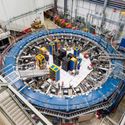
Beyond the Standard Model? The Latest from Fermilab
06/07/21 A discussion about the recent Muon g-2 experiment at Fermi National Accelerator Laboratory (Fermilab) and also Fermilab's work on the upgrade of the CMS project at CERN. Steve Nahn and James Mott

Our Robots, Ourselves
02/10/16 The author of "Our Robots, Ourselves" discusses the limits of robot autonomy. David Mindell
Biodiversity in the Sixth Mass Extinction
03/19/24 A prominent biologist explains the crucial importance of biodiversity for life on Earth, and how the sixth mass extinction fractures that stability. Michael Reed.

New Paradigms of Conservation
07/12/16 How a combination of innovative conservation techniques and involvement of local villages is combating damage in the Himalayas. Kamal Bawa

The Science of Clouds and Climate
03/21/15 The Cziczo Lab at MIT investigates the particles that form clouds and the vital role of clouds in climate change.
Daniel Cziczo

Weighing In on Metabolism
09/13/22 The increasing rate of obesity is a public health issue. Nutritionists analyze the cause and the solution. Susan Roberts

Harvesting Electricity Out of Thin Air
10/24/23 Imagine a future world in which clean electricity is available anywhere you go. The generic Air-gen effect innovation means that this future world can become a reality. Jun Yao
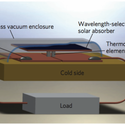
Solar Energy the Third Way
02/14/12 Efficient production of solar energy with solar thermo-electric generators (STEGs)... Gang Chen
Today's Featured Contributors
Featured Author

Eric Chaisson, Ph.D.
An interdisciplinary approach to the evolution of complexity in the cosmos -from subatomic particles to life
Featured Guest

Tanya Smith, PhD
An expert on reconstructing individual histories through fossil teeth
As a world society, it seems clear that we have arrived at a point in our history when there must be a major increase in the capability of ordinary people to cope with the scientific and technological culture that is shaping their lives and the lives of their children.
—Leon Lederman, Nobel Laureate in physics